

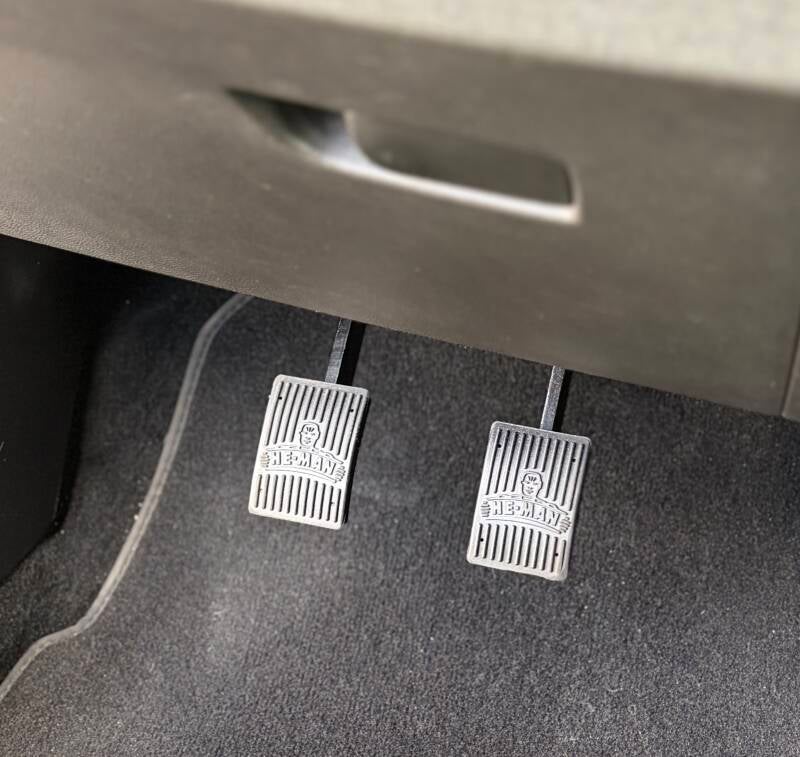
Why Don’t Driving Instructor Cars Have a Dual Accelerator?
Have you ever wondered why most driving instructor cars have dual controls, but usually only include an extra brake pedal and clutch pedal — rather than a second accelerator?
If you are learning to drive in a manual car, you may have noticed that your driving instructor can use the dual controls to help keep you safe. But why is there normally no accelerator pedal on the instructor’s side?
At Wilko’s Wheels Driver Training, I provide professional manual driving lessons in Milton Keynes, Newport Pagnell and Cranfield, and this is a question that many learner drivers ask.
1. The dual brake is the most important safety control
The main purpose of dual controls is to help prevent dangerous situations.
If a learner driver is approaching a hazard and does not react quickly enough, the driving instructor can use the dual brake pedal to help stop or slow the car.
For example, during a manual driving lesson in Milton Keynes, a learner may be approaching a junction, pedestrian crossing or other hazard. If additional braking is needed, the instructor can intervene quickly.
The brake is therefore considered the most important additional control for safety.
2. A second accelerator could cause confusion
An additional accelerator pedal could potentially create confusion.
Imagine a learner driver trying to slow down while the instructor independently applies the accelerator. This could create an unpredictable situation and potentially make the car move faster when the learner is trying to reduce speed.
For this reason, an instructor’s accelerator pedal would usually provide little benefit during normal learner driver training.
Book Your Driving Lessons Today
3. Verbal coaching is normally enough
When a learner driver needs to accelerate, the instructor can usually provide clear verbal guidance.
For example, during manual driving lessons in Newport Pagnell or Cranfield, I can coach a learner driver by explaining when they need to:
- Apply more acceleration
- Reduce acceleration
- Change gear
- Check their mirrors
- Prepare for a junction or hazard
If a learner accelerates too much, the dual brake can be used if necessary to help reduce the vehicle’s speed.
This is one of the reasons why effective communication between the learner and driving instructor is so important.
4. Modern cars are designed to provide plenty of power
Modern cars generally have sufficient engine power for normal driving.
In a manual car, learners are taught how to coordinate the clutch, accelerator and gears smoothly. As their confidence develops, they learn how to control the car’s speed and acceleration independently.
At Wilko’s Wheels Driver Training, I help learner drivers develop these skills gradually through structured manual driving lessons across Milton Keynes, Newport Pagnell and Cranfield.
5. The aim is to develop independent drivers
The ultimate purpose of driving lessons is to help learners become safe and independent drivers.
Although dual controls provide an important safety backup, the learner should gradually develop the skills and confidence to control the vehicle themselves.
The dual brake allows the driving instructor to intervene when necessary, while verbal coaching helps the learner understand how to deal with different situations safely.
Book Your Driving Lessons Today
The simple answer
A second brake can help prevent an accident, while a second accelerator could potentially create confusion and introduce additional risks.
That is why most driving instructor cars are fitted with a dual brake, and a dual clutch in manual vehicles, but not usually a second accelerator.
If you are looking for professional manual driving lessons in Milton Keynes, Newport Pagnell or Cranfield, contact David at Wilko’s Wheels Driver Training to begin your driving journey.
David Wilkinson ADI
wilkoswheels.co.uk
Add comment
Comments