


Why I’m Studying the Bright Coaching Diploma in Coaching and Behavioural Change for Safe Driving
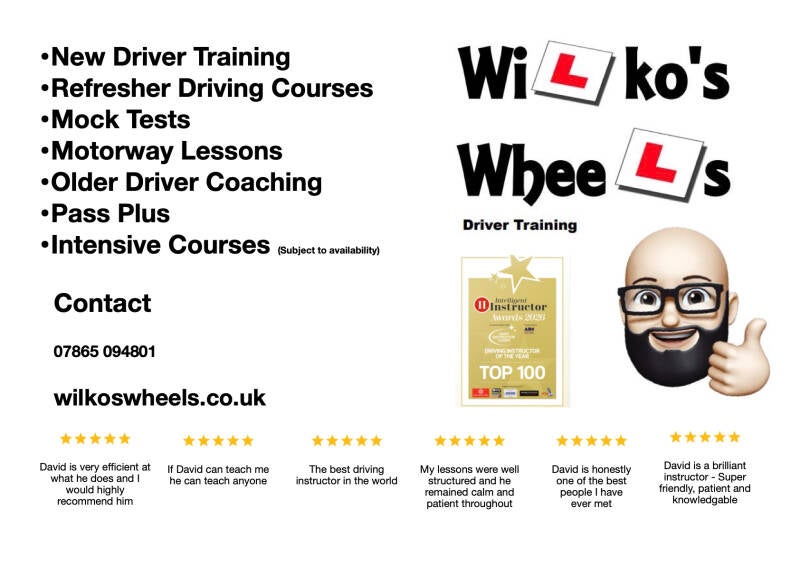
At Wilko’s Wheels Driver Training, I believe learning to drive should be about much more than simply passing your driving test.
Of course, developing good car control, understanding the Highway Code and preparing for the driving test are all important. But my responsibility as a driving instructor goes further. I want to help my learners become safe, responsible and self-aware drivers for life.
That is one of the reasons I am currently studying the Bright Coaching Professional Diploma in Coaching and Behavioural Change for Safe Driving.
What is the Bright Coaching Diploma?
The Professional Diploma in Coaching and Behavioural Change for Safe Driving is an accredited qualification designed for Approved Driving Instructors and ADI trainers.
The qualification is a 16-credit learning programme at SCQF Level 7 and focuses on coaching, behavioural change, driver psychology and the development of safer driving behaviours.
Bright Coaching explains that the course aims to help instructors develop coaching techniques that increase a client’s self-awareness and responsibility, understand behavioural-change techniques and address higher levels of the Goals for Driver Education (GDE) Matrix.
The course is delivered through four modules, with assignments completed throughout the programme. Bright Coaching states that the qualification takes approximately nine months to complete.
For me, this is about continuing to develop as a driving instructor rather than simply being satisfied with the knowledge I already have.
Why does coaching matter when learning to drive?
Learning to drive involves far more than learning how to operate a car.
A learner may know that speeding is dangerous, understand the consequences of using a mobile phone while driving or recognise that driving when tired can increase risk.
But knowing something is dangerous does not always mean that we will make the safest decision when we are actually behind the wheel.
This is where coaching and behavioural change become particularly interesting.
The decisions we make as drivers can be influenced by emotions, attitudes, confidence, peer pressure, personal goals, stress and our perception of risk.
A technically competent driver can still make poor decisions.
My aim is therefore not simply to teach learners how to control a car, but also to help them develop the thinking and decision-making skills that can help them deal with real-world driving situations.
How does this benefit my learners?
Studying the Bright Coaching Diploma is helping me look beyond the immediate driving task and consider the bigger picture.
During lessons, this can mean creating more opportunities for learners to:
● Think about why they make particular driving decisions.
● Identify their own strengths and areas for development.
● Reflect on mistakes rather than simply being told what they did wrong.
● Take greater responsibility for their learning.
● Develop better awareness of risk.
● Consider how emotions and attitudes can influence driving.
● Build confidence without developing overconfidence.
● Think about how their driving may change once they pass their test.
● Develop strategies for dealing with challenging situations independently.
This fits closely with the principles of client-centred learning already recognised within the DVSA’s National Standard for Driver and Rider Training.
The DVSA explains that client-centred learning is about creating a conversation between the learner and instructor based on mutual respect. It also emphasises helping learners develop competence and the willingness to continue learning throughout their driving career — not simply teaching them enough to pass a test.
Book Your Driving Lessons Today
Passing the driving test is only the beginning
One of the things I find particularly valuable about this course is the emphasis on what happens after the driving test.
A driving test can assess whether someone has reached the required standard on the day, but passing does not automatically make someone an experienced driver.
After passing, a new driver may suddenly find themselves driving alone, carrying friends, driving at night, using motorways or dealing with situations they have never previously experienced.
There is no instructor sitting beside them to provide advice.
That means developing good judgement, self-awareness and decision-making skills during the learning process can be extremely valuable.
Understanding the GDE Matrix
Another important part of the Bright Coaching approach is the Goals for Driver Education (GDE) Matrix.
Traditional driver training can concentrate heavily on vehicle control and the immediate driving environment.
The GDE approach encourages us to look at higher-level influences on driving behaviour, including how drivers assess risk, make decisions and how personal goals, attitudes and emotions can influence what happens behind the wheel.
This is particularly relevant when preparing learners for life after the driving test.
For example, imagine a newly qualified driver who is running late to meet friends.
Their technical driving ability has not suddenly disappeared. However, their personal goals and emotions may influence their decisions.
Understanding situations like this can help us explore an important question:
“What might influence the decisions you make when you are driving on your own?”
That type of conversation can be just as valuable as practising another manoeuvre.
Coaching does not mean I stop teaching
It is important to understand that coaching is not about abandoning instruction.
The DVSA’s guidance makes clear that coaching is an extension of an instructor’s range of teaching approaches, rather than an automatic replacement for instruction.
There will always be occasions when a learner needs a clear explanation, demonstration or timely intervention to maintain safety.
As an instructor, I need to be able to choose the right approach for the learner and the situation.
Book Your Driving Lessons Today
What does this mean for Wilko’s Wheels learners?
For my learners in Milton Keynes, Newport Pagnell, Cranfield and around Cranfield University, my goal is to provide driving lessons that prepare them for much more than their practical driving test.
I want learners to become increasingly independent as their experience develops.
That means encouraging them to think, analyse situations, recognise risk and develop their own solutions while I remain responsible for maintaining a safe learning environment.
It also means that I am continuing to learn myself.
I don’t believe a driving instructor should stop developing simply because they have qualified as an ADI.
Roads change. Research develops. Teaching methods evolve. Our understanding of human behaviour continues to improve.
The Bright Coaching Diploma is part of my commitment to continuing that professional development.
My aim: safer drivers for life
My reason for studying the Bright Coaching Diploma in Coaching and Behavioural Change for Safe Driving is simple.
I want to become an even better driving instructor for my learners.
Passing the driving test is an important milestone, but it is only the beginning of a person’s driving career.
At Wilko’s Wheels Driver Training, I want to help learners develop the skills, knowledge, confidence, awareness and decision-making abilities they need to continue learning long after the L-plates have come off.
I am currently working towards this qualification, and I look forward to bringing what I learn from the course into my driving lessons.
Because my job isn’t just about teaching someone to pass a test.
It’s about helping them become a safer driver for life.
David Wilkinson ADI
wilkoswheels.co.uk
Add comment
Comments